Furnace or boiler failure? Your emergency repair guide
By Kiss János 16 min read
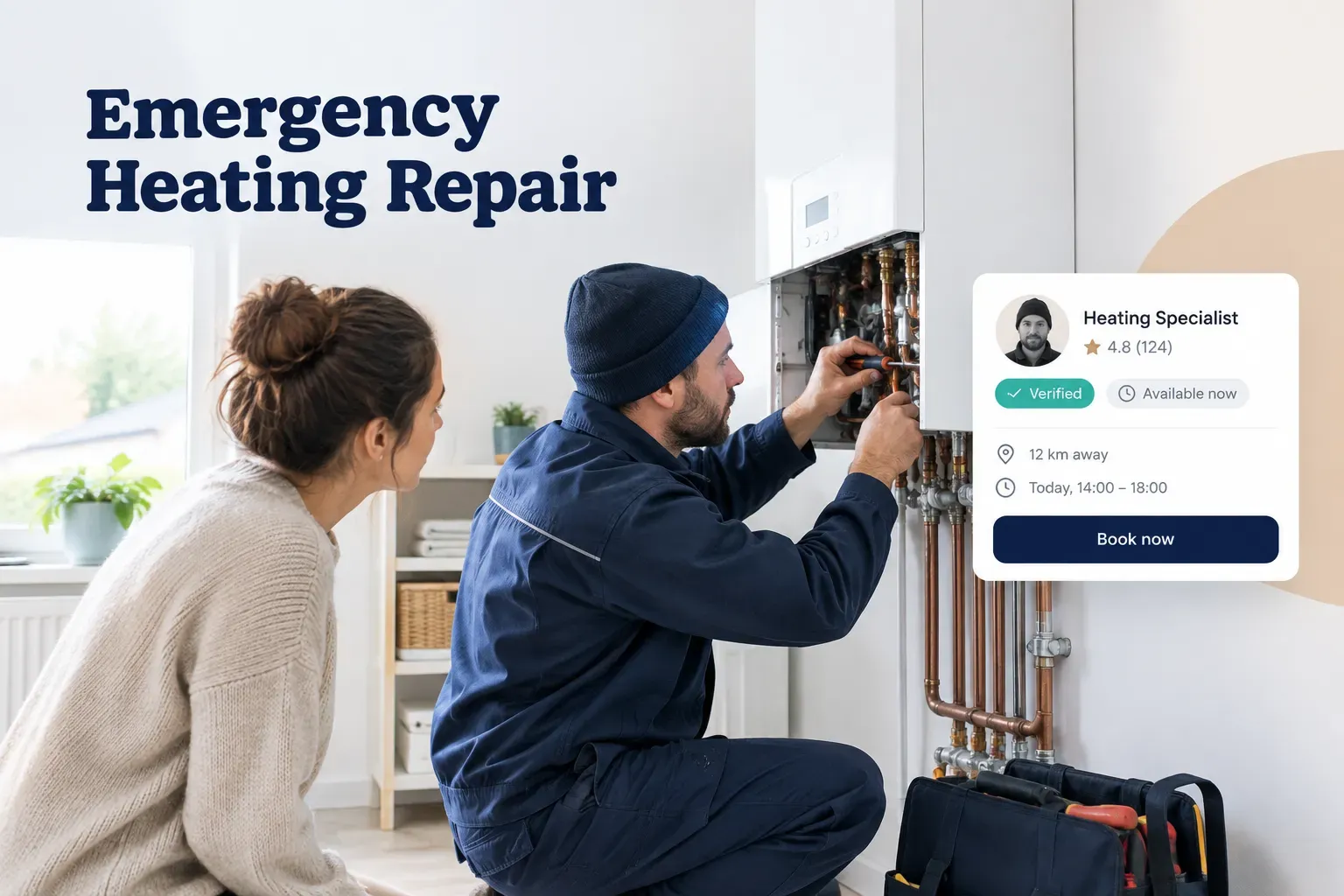
When the heat dies, what you do first matters most
Most no-heat calls are not emergencies. A tripped breaker, a clogged filter, or a thermostat with dead batteries accounts for a surprising share of winter service requests, and many of those can wait until morning.
But a small subset can’t wait at all.
When a heating failure involves gas, carbon monoxide, fire, or extreme cold threatening vulnerable people, the first five minutes decide how the night goes. Getting that call right is the whole point of emergency heating repair: separating the inconvenient from the dangerous, then acting accordingly.
This guide follows a decision-first structure.
You’ll start with safety triage, move to safe checks matched to your system type, then protect the people and pipes in your home. Finally, you’ll learn how to arrange qualified help quickly without falling for opportunistic scams.
One more thing.
Heating failures aren’t just a gas furnace problem. The same logic applies whether you rely on a hydronic boiler, an air-source heat pump, electric resistance heat, baseboard heaters, or ductless mini-splits.
Each system fails differently.
A boiler might lose pressure, a heat pump might ice over, and an electric furnace might trip its breaker over and over. Knowing which one you have, and what its warning signs look like, shortens the path to a fix.
Read the triage section first, even if you’re confident it’s “just the furnace.” That habit is what keeps an ordinary outage from turning into something much worse.
Is this actually an emergency?
Here’s the counterintuitive part: the scariest-feeling situation (a freezing house at 2 a.m.) is often less dangerous than a quiet one, like a faint gas smell or a chirping CO detector. Work through these steps in order before you touch anything.
Leave the house now: Gas, CO, fire, electrical
- Smell gas? Don’t touch anything electrical. Do not flip light switches, light matches, unplug appliances, or adjust the thermostat, because any spark can ignite accumulated gas. Natural gas carries an added odorant that smells like rotten eggs or sulfur, so trust your nose.
- Get everyone out, then call from outside. Leave the door open behind you and walk well away from the building before calling your gas utility’s emergency line or 911. Good gas leak safety means you do not re-enter until the utility or fire department clears the home.
- Treat a carbon monoxide alarm as real. If a working carbon monoxide alarm sounds, evacuate everyone immediately, including pets, and call emergency services from outside. Don’t silence the alarm, open windows to “air it out,” or hunt for the source while you’re still inside.
- Watch for CO symptoms even without an alarm. Headaches, dizziness, nausea, and confusion that affect several household members at once (and ease when you leave) strongly suggest CO exposure. Get outside and seek medical help.
Carbon monoxide is odorless and colorless, which is exactly why it kills people who feel perfectly fine one moment and are disoriented the next. A cracked heat exchanger or a blocked flue or vent can push combustion gases into living spaces with no visible warning.
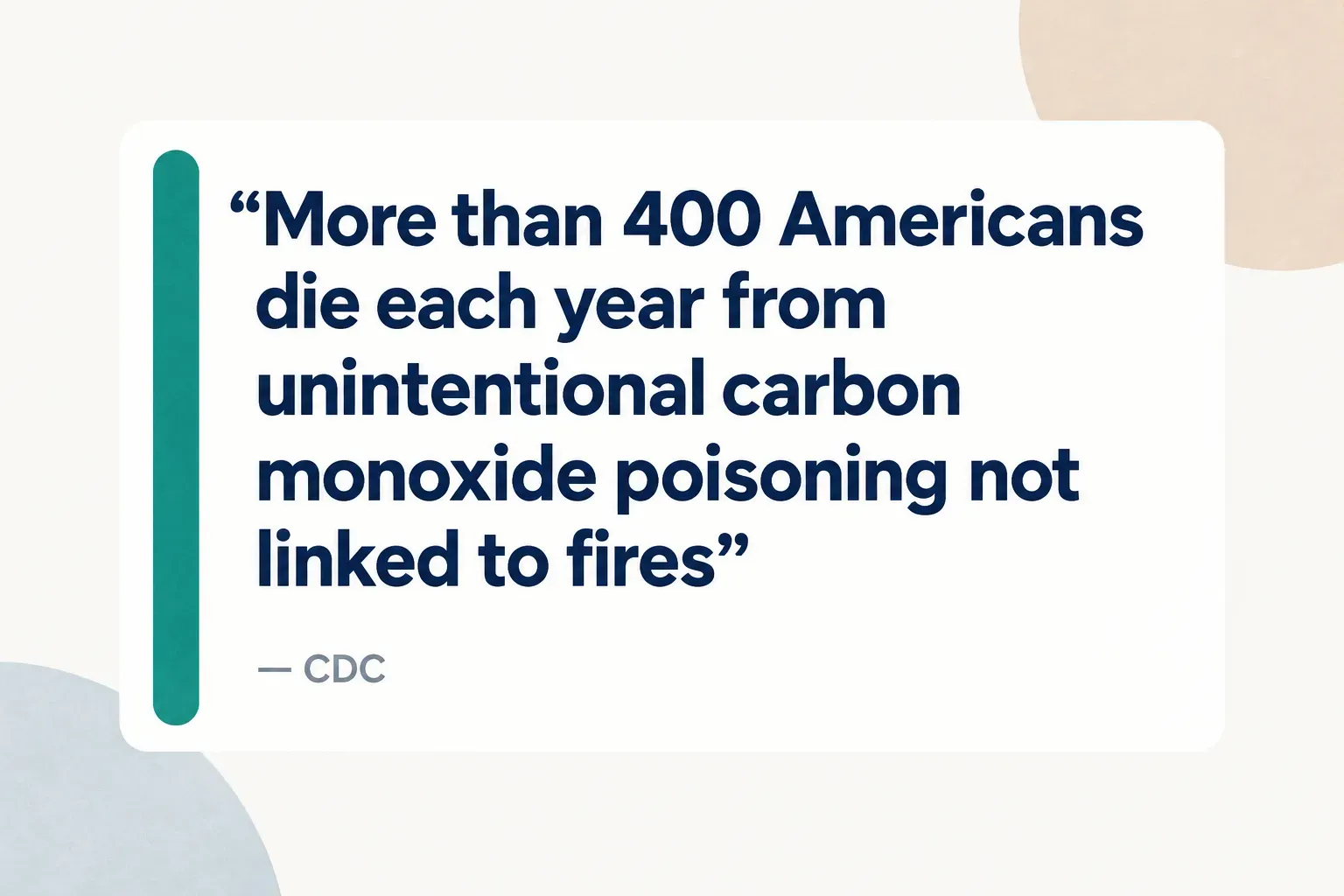
- Burning smell, smoke, or sparks means shut it down. A brief dusty smell on the first cold day is normal, but persistent burning, visible smoke, or sparking at the unit points to fire risk. Turn the system off at the thermostat if it’s safe to do so, leave if smoke is present, and call the fire department.
- A breaker that keeps tripping is a warning, not a puzzle. If the heating circuit breaker trips again immediately after one reset, stop there. Repeated resets can overheat wiring, and diagnosing the fault requires a licensed technician or electrician.
- Extreme cold plus vulnerable occupants escalates everything. An infant, an elderly relative, or someone using powered medical equipment turns an ordinary outage into an urgent one, even with no gas or fire risk. When outdoor temperatures are well below freezing, request same-day emergency service and plan for safe shelter if repairs stall.
Ordinary no-heat problems that can wait
- One cold room usually isn’t a system failure. A single room running cooler often traces back to a closed vent, a blocked return, or poor insulation on an exterior wall. Book a standard service visit rather than an emergency call.
- A slow temperature drop in a tight home buys you time. A well-insulated house might lose only a degree or two per hour, giving you room to run safe checks and schedule a technician during regular hours. Keep an eye on the thermostat reading as the night goes on.
- Weak but steady heat is a performance problem. If the system cycles on and off normally but simply struggles to keep up, the cause is more likely a dirty filter, a failing blower, or a heat pump near its cold-weather limit. Annoying? Yes. Dangerous? Rarely.
Safe checks before you call
A large share of winter service calls end with the technician changing a filter or swapping thermostat batteries. That’s money you can keep, as long as you stay within the boundaries of what a homeowner can safely inspect.
The rule of thumb is simple: look, don’t open. If a check requires removing panels, touching wires, or handling gas controls, it belongs to a professional.
Furnaces and boilers
- Confirm the service switch is on. Most furnaces and boilers have a light-switch-style power switch on or near the unit, and it’s easily bumped off by someone mistaking it for a basement light. Flip it back on once and give the system a few minutes to start.
- Check that vents and registers are open. Closed or furniture-blocked supply and return vents restrict airflow, which can cause a gas furnace to overheat and shut itself off. Clear at least a foot of space around each register.
- Read the boiler pressure gauge. Most residential boilers run around 12 to 15 psi when cold and up to roughly 20 to 25 psi when hot. A reading near zero or approaching the 30 psi relief valve setting is a reason to call a boiler specialist, not to start adjusting valves yourself.
- Note any blinking status light. Many modern furnaces display HVAC diagnostic codes as a pattern of LED flashes visible through a small window. Write down the pattern and check the legend printed on the panel door, but don’t remove the panel to get a better look.
- Look at the exterior vent. High-efficiency furnaces vent through PVC pipes on an outside wall, and snow or ice drifts can block them, triggering a pressure switch shutdown. Gently clearing snow from around the terminal is safe; reaching inside the pipe is not.
Heat pumps and ductless systems
- Recognize a normal defrost cycle. During a heat pump defrost cycle, the outdoor fan stops, steam may rise from the unit, and indoor airflow can feel cool for 5 to 15 minutes. This is routine and usually repeats every 30 to 90 minutes in frosty conditions.
- Spot abnormal ice buildup. A light frost that clears regularly is fine. A thick block of ice encasing the coil, or ice that persists for hours, suggests a defrost control or refrigerant problem that needs a technician.
- Understand auxiliary heat. When the thermostat shows “AUX” or “EM HEAT,” backup electric resistance coils are doing extra work. Occasional auxiliary heat is expected in deep cold, but constant use can signal a failing compressor and will drive your electric bill up sharply.
- Know your unit’s cold-weather limit. Many standard heat pumps lose meaningful capacity below about 25°F, while cold-climate models are rated to keep working down to 5°F or even -13°F. Reduced output below the rated limit is a design constraint, not necessarily a breakdown.
- Clean mini-split filters. Ductless indoor heads have washable mesh filters behind the front cover that clog quickly. Rinse, dry completely, and reinstall.
Thermostats, filters, and breakers
- Start with thermostat troubleshooting. Confirm the mode is set to “Heat,” the setpoint is several degrees above room temperature, and the display isn’t blank from dead batteries. Smart thermostats can also lose Wi-Fi or run a schedule you forgot about.
- Pull and inspect the air filter. A clogged filter starves the system of airflow, causing the heat exchanger to overheat until the high-limit furnace safety switch shuts the burners off. The result looks like a major failure, but an air filter replacement often restores heat within minutes.
- Check the breaker once, not five times. Look for a tripped breaker labeled furnace, air handler, or heat pump, and reset it a single time. If it trips again, leave it off.
Now the hard boundaries.
Non-professionals should never open gas valves or burner compartments, test electrical components with a meter, bypass safety switches or lockouts, or relight pilot lights on equipment they don’t know well. Those safety devices exist to stop combustion when something has gone wrong.
If your system has locked out repeatedly, if you suspect a cracked heat exchanger, or if a breaker trips on every reset, the safest repair tonight is no repair at all. Leave the system off until it’s inspected.
Protecting people, pets, and pipes
A heating outage has two clocks running: one for your plumbing and one for the people in your home. Both move faster than most homeowners expect, especially in older houses with drafty walls.
Keeping pipes from freezing
Water expands about 9% when it freezes, and that pressure builds between the ice blockage and a closed faucet until something gives. Burst frozen pipes can release hundreds of gallons of water once they thaw.
- Prioritize the riskiest runs. Pipes along exterior walls, in unheated basements, inside crawlspaces, and running through attics freeze first. Check these areas before anywhere else.
- Open cabinet doors under sinks. This lets warmer room air reach supply lines tucked against outside walls in kitchens and bathrooms.
- Let faucets drip. A slow, steady drip on both hot and cold lines relieves pressure in the system, which is what actually causes most bursts. Moving water also freezes more slowly.
- Know the risk window. Once temperatures around vulnerable pipes drop into the low-to-mid 20s °F, freezing can begin within a few hours. Pipes near exterior walls or in uninsulated spaces go faster.
- Locate your main water shutoff now. If a pipe bursts, shutting off the main within minutes can be the difference between a mop-up and a flooded basement.
Vulnerable occupants and pets
Infants and older adults lose body heat faster and often don’t feel cold the way healthy adults do. That’s why hypothermia prevention starts long before anyone is shivering.
- Consolidate into one warm interior room. Choose a room with few exterior walls and windows, close the door, and gather everyone there. Shared body heat in a small space adds up.
- Move the most vulnerable first. Infants, elderly residents, and anyone with respiratory, cardiac, or mobility conditions should be in the warmest spot, layered in dry clothing, hats, and blankets.
- Bring pets inside the warm zone. Dogs, cats, birds, and reptiles in tanks are all sensitive to cold. Reptiles and birds especially can decline quickly without supplemental warmth.
- Plan for powered medical equipment. Oxygen concentrators and CPAP machines need electricity, so confirm backup batteries are charged. If the outage stretches on, relocate to a warmer location.
Safe vs. unsafe temporary heat
Desperation drives dangerous choices.
Every winter, people turn on gas ovens or bring generators into garages, and carbon monoxide poisoning follows.
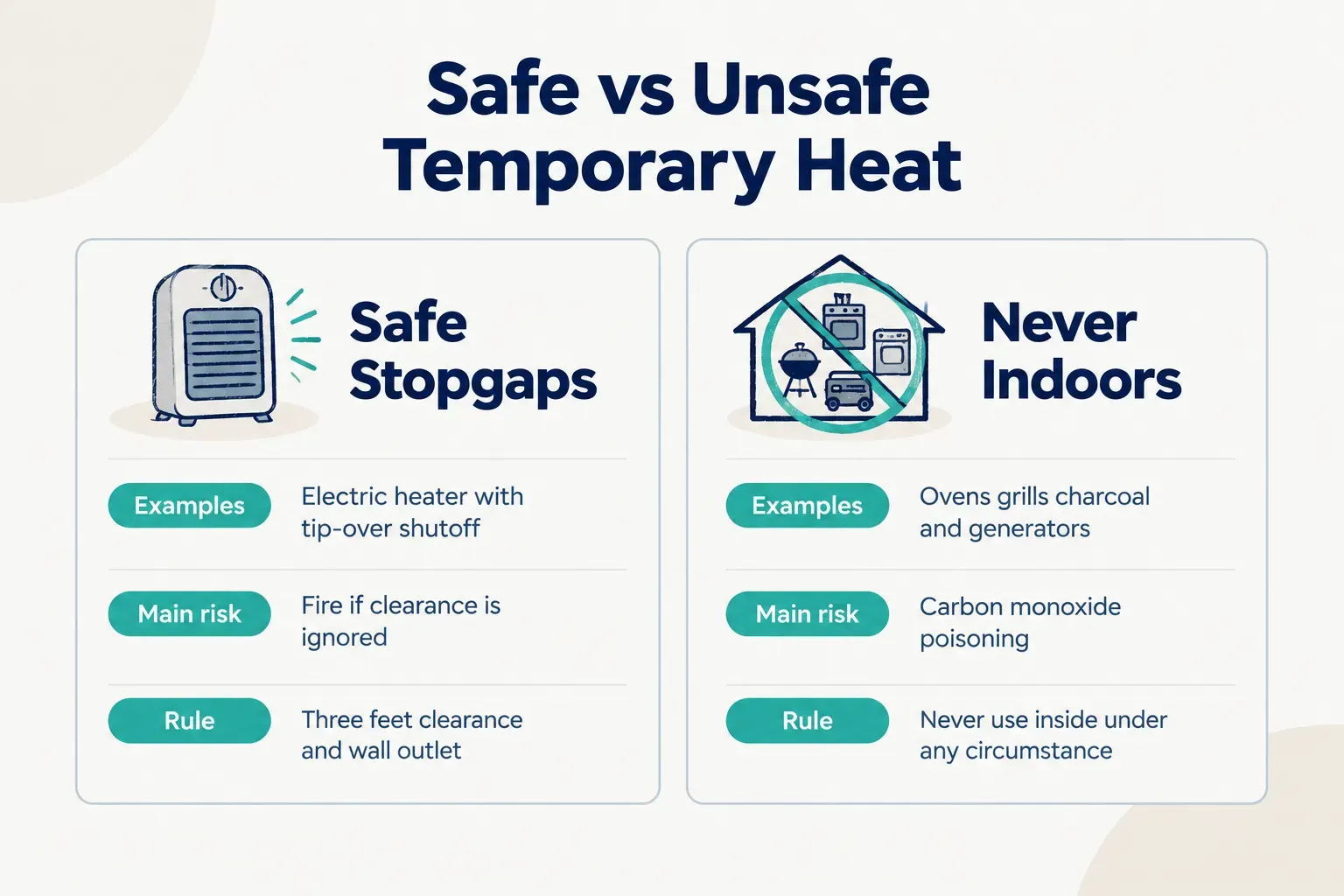
- Never use these indoors for heat: gas or electric ovens, gas grills, outdoor patio heaters, charcoal of any kind, or generators and other unvented fuel-burning appliances. An attached garage counts as indoors, even with the door open.
- Electric space heaters are acceptable with discipline. Good space heater safety means a unit with tip-over and overheat shutoff, plugged directly into a wall outlet (never an extension cord), with at least 3 feet of clearance from bedding, curtains, and furniture.
- Use extra bedding and layers. Thermal blankets, sleeping bags, and wool layers are cheap, silent, and completely safe.
- Close off unused rooms. Shutting doors to rooms you aren’t using concentrates whatever warmth remains in the spaces you occupy.
Getting qualified help fast
The fastest repair rarely goes to the first company you call. It goes to the one that understood your problem before showing up, sent the right specialist, and arrived with the right parts.
Information to gather before you call
Five minutes of documentation can save an hour of diagnostic time.
Before contacting anyone, note the equipment type and fuel source: gas furnace, oil boiler, electric furnace, air-source heat pump, mini-split, or baseboard. Then find the model and serial number on the unit’s data plate, usually inside or beside the access panel door.
Record what the thermostat shows, along with any error codes or blinking light patterns on the unit. Describe unusual sounds (clicking, banging, screeching) and smells (burning, sulfur, hot metal) in plain words.
Context matters too.
Mention recent power outages, storms, or heavy snow, since those often explain blocked vents or tripped controls. Finally, take clear photos of the unit, the data plate, the thermostat, and any iced or blocked vents.
Renters, landlords, and property managers
Renters carry a different burden: proving the problem and when it started. Document the outage in writing right away with time-stamped photos of the thermostat and a message to your landlord or property manager, ideally by email or a portal that keeps a record.
Check your lease for language on emergency repairs.
Many jurisdictions require landlords to maintain adequate heat and respond to heating failures within a set window, sometimes 24 hours in winter, though rules vary widely by city and state.
If the outage drags on during extreme cold, ask in writing about temporary accommodation or a rent abatement. Don’t hire a contractor and deduct the cost yourself unless your local law and lease clearly allow it.
Landlords and property managers benefit from the same discipline.
A clear intake record speeds dispatch, protects you if a dispute arises, and shows tenants their complaint was taken seriously.
Comparing responders and avoiding scams
Cold-calling five numbers at midnight is exhausting and slow. Every call means repeating the same symptoms, then waiting to hear whether anyone is even available.
Organizing help through a single service app cuts that friction.
You post your symptoms and photos once, and the details reach providers who match the right trade, whether that’s a furnace technician, a boiler specialist, or an electrician for a recurring breaker fault. You can share secure access instructions (gate codes, lockbox details) without broadcasting them in text messages.
Frendex is one practical example of this approach.
Its live map shows which providers are actually available nearby, and its verified profiles display confirmed credentials alongside ratings from completed jobs, so you’re comparing real track records instead of ad copy.
Whichever route you choose, vet the responder before granting access. Ask for license and insurance confirmation, an estimated arrival window, and a description of their diagnostic process.
Insist on a written repair recommendation before authorizing work. That document should name the failed component, the proposed fix, and the cost.
Red flags: demands for cash only, large upfront payments before diagnosis, pressure to skip diagnostics and “just replace it,” or a technician who condemns a system without showing you the evidence.
Then there’s the bigger question.
Should you repair or replace?
Price alone is a poor guide.
Weigh the system’s age against its expected lifespan: roughly 15 to 20 years for gas furnaces, 20 to 30 for boilers, and 10 to 15 for heat pumps. Factor in how often it’s needed repairs recently, whether parts are still available, and how much efficiency it has lost.
Safety concerns override everything else.
A confirmed cracked heat exchanger on a 17-year-old furnace is usually a replacement, not a patch. A common rule of thumb says that when a repair costs more than half the price of a new system on a unit past three-quarters of its lifespan, replacement typically wins on total cost of ownership.
The one thing to do tonight
Decide which kind of night you’re having.
If you smell gas or hear a carbon monoxide alarm, leave the house and call emergency services from outside.
No exceptions, no investigating, no “just checking.”
If it’s an ordinary no-heat problem, the path is just as clear. Run the safe checks, protect your pipes and the most vulnerable people in your home, then book a qualified technician.
Preparation pays off when things go wrong.
Clear documentation of symptoms, codes, and photos gets the right specialist to your door faster, and verifying credentials before granting access protects you from the scammers who thrive on winter panic.
And tomorrow?
Think about prevention.
As of 2026, most manufacturers and fire safety groups still recommend an annual professional inspection before heating season, and that single visit catches many cracked heat exchangers and failing igniters before they strand you.
Test your CO alarms at the start of each season.
Replace filters every one to three months during heavy use.
Keep outdoor vents and heat pumps clear of snow.
Small habits, really… but consistent preventive heating maintenance is what keeps tonight’s emergency from becoming next winter’s repeat.
Frequently asked questions
What is considered an emergency HVAC repair?
An emergency HVAC repair is any heating failure that involves a safety hazard or a rapid, severe temperature drop affecting vulnerable occupants. Gas smells, carbon monoxide alarms, smoke, sparking, and repeatedly tripping breakers all qualify. Reduced comfort on its own, such as one cool room or slightly weak airflow, generally does not.
What do you do when your heater stops working in winter?
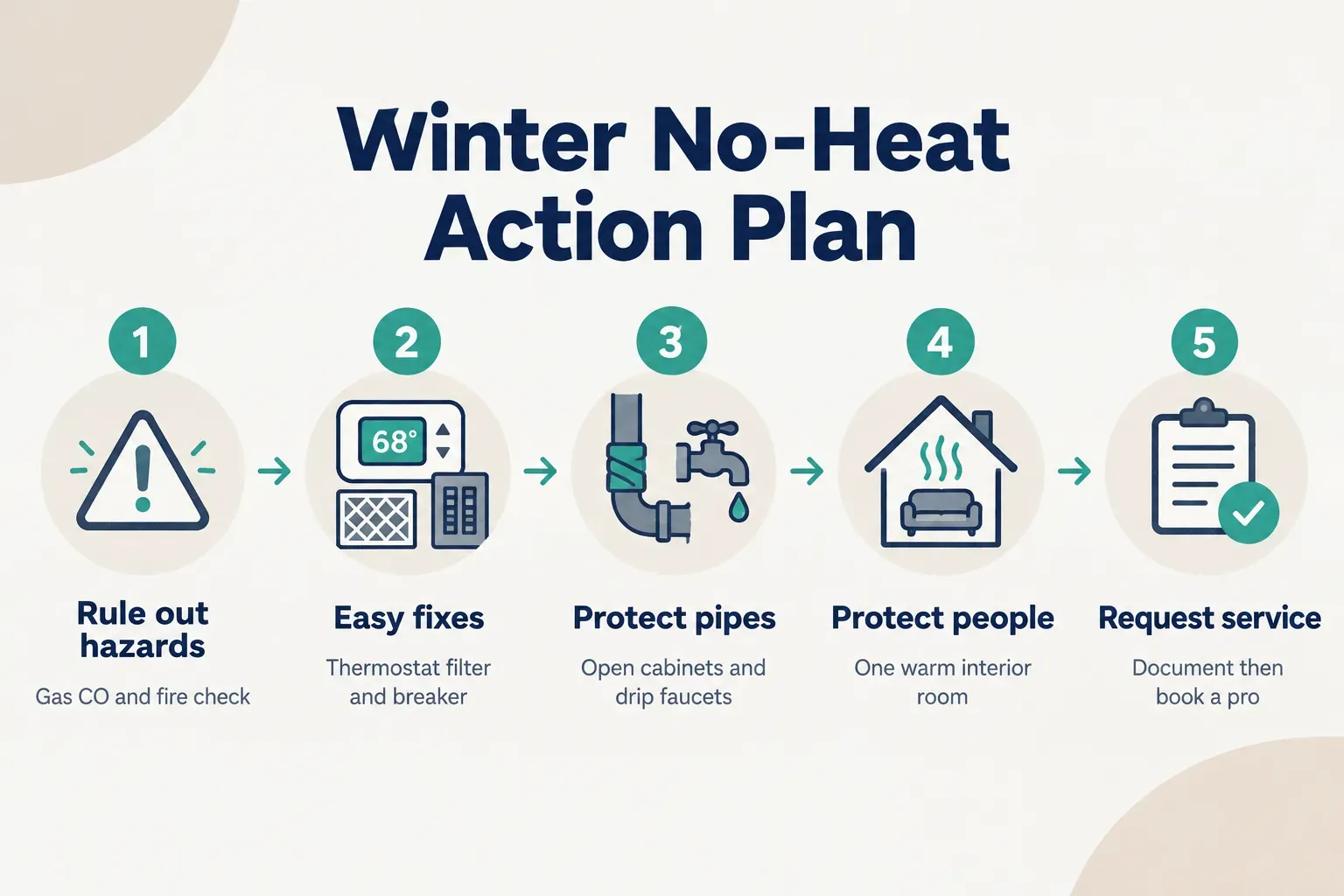
First rule out hazards, then check the easy fixes, protect pipes and people, and request service. That means confirming there's no gas smell, CO alarm, or burning odor before checking the thermostat, filter, and breaker. If heat doesn't return, open sink cabinets, drip faucets, gather everyone in one warm room, and contact a qualified technician.
How long can a house go without heat in the winter?
Most homes can go several hours to a day without heat before serious damage occurs, depending on insulation and outdoor temperature. As general guidance, indoor temperatures below roughly 50 to 55°F for several hours raise both pipe-freeze and health risks. A drafty older home in single-digit weather can reach that point overnight, while a tight newer home may hold warmth far longer.
Can I leave my furnace running if it's making a strange noise?
No, you shouldn't leave a furnace running if it's grinding, screeching, or banging. Grinding and screeching often point to failing blower motor bearings, while loud bangs at startup can indicate delayed ignition, where gas builds up before lighting. These problems frequently precede a safety shutdown, so power the system off and have it inspected.
What are the most common reasons a furnace stops working?
The most common reasons are a clogged filter, ignition or pilot failure, and thermostat problems. Other frequent culprits include a tripped breaker or blown fuse, a closed gas valve after other appliance work, and a blocked flue or exhaust vent. In heat pumps, refrigerant leaks and defrost control failures top the list.
How do I keep my pipes from freezing if my heat is not working?
Keep pipes from freezing by letting faucets drip, opening cabinet doors under sinks, and adding safe warmth near vulnerable runs. Focus on exterior walls, crawlspaces, and unheated basements first. A properly spaced electric space heater can help in a basement, and knowing where your main water shutoff is limits damage if a pipe does burst.
Need a hand with something?
The Frendex map shows you who is available near you, in real time.
Get the app free Get the app freeFree, no card needed
Related articles

How much does a locksmith cost in 2026?
See what locksmiths actually charge in 2026, trip fees, labor, and parts included. Real job costs and hidden add-ons before you book a call.

Pest control cost in 2026: What you'll really pay
Real 2026 pricing for one-time visits, recurring plans, and termite or bed bug jobs. Learn what drives $95 vs $1,400 quotes before you sign.
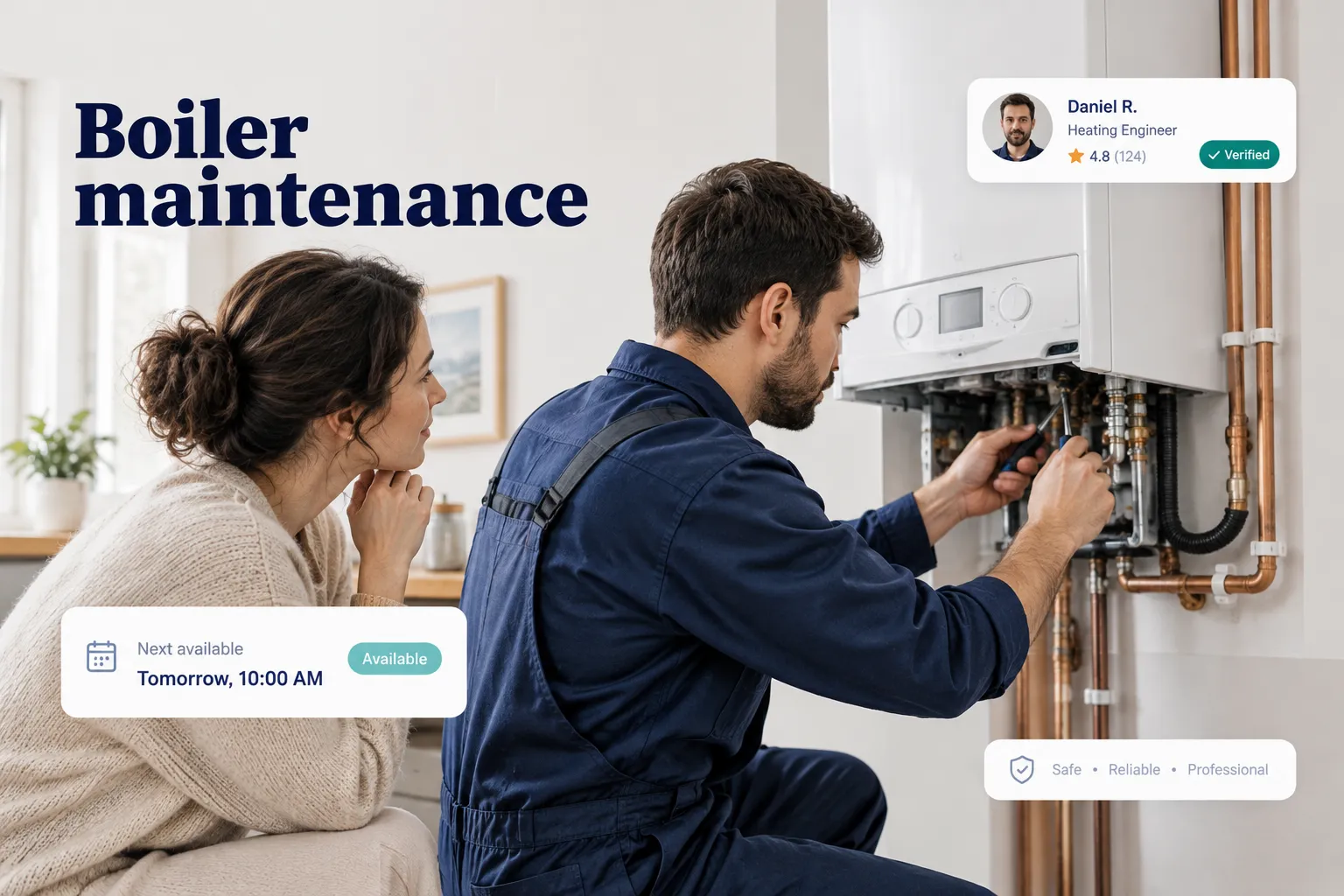
Boiler maintenance: A homeowner's safety and service guide
Learn which boiler checks are safe to DIY, which need a pro, and the warning signs that mean call for help now. A homeowner's framework for 2026.