What does a plumber actually do?
By Kiss János Updated 13 min read
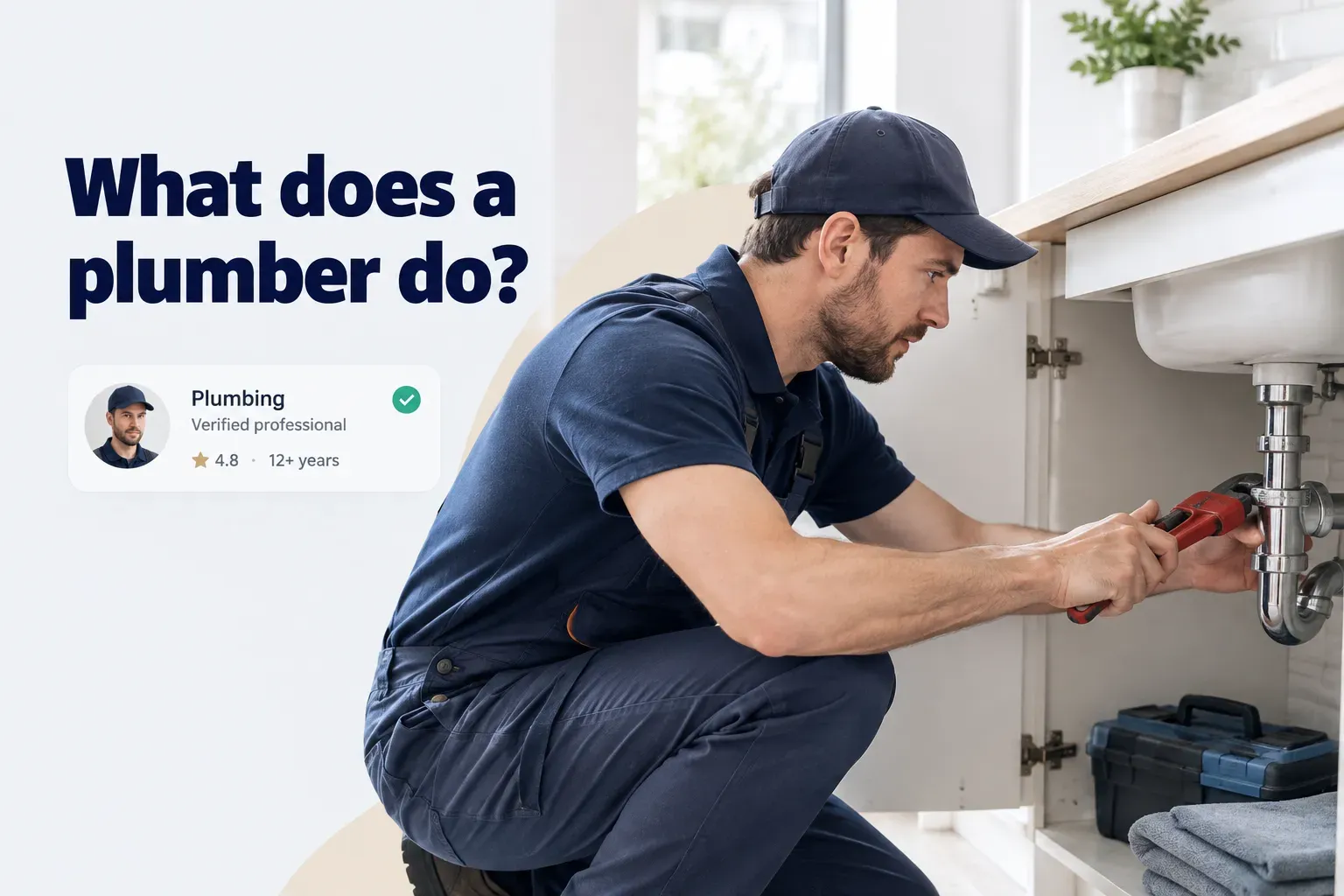
More than leaks and clogs
Your home’s plumbing system moves clean water in, carries waste water out, and often delivers gas to your stove or water heater.
When any part of it fails, the problem rarely stays small.
A pinhole leak can rot a subfloor, a cracked vent pipe can let sewer gas into a bathroom, and a faulty gas connection is a genuine safety hazard.
So what does a plumber do? Far more than fix a dripping faucet.
A licensed plumber protects your potable water supply, keeps your drainage working, and makes sure every connection meets local building codes.
In practice, that makes them part tradesperson, part detective, and part public health worker.
This guide breaks down the real job. You’ll see the daily tasks plumbers handle, the diagnostic workflow they follow on a service call, how licensing and specialties differ, and which jobs you can safely tackle yourself.
By the end, you’ll know what happens before, during, and after a plumber walks through your door.
That knowledge saves money.
It also helps you avoid the kind of emergency call nobody wants at 2 a.m.
What a plumber does day to day
Most residential plumbing calls fall into a surprisingly small set of categories. A typical plumber might handle four to six jobs in a single day, ranging from a 20-minute faucet repair to a full afternoon replacing a water heater.
Here’s how that work breaks down.
Everyday repairs
These are the bread-and-butter calls that keep plumbers busy year-round.
Small on the surface, but often signs of something bigger.
- Leaky faucets: Usually caused by a worn washer, O-ring, or cartridge. Plumbers identify the faucet type (compression, cartridge, ball, or ceramic disc) and replace the failed part rather than guessing.
- Running toilets: A toilet that won’t stop filling typically has a bad flapper, fill valve, or misadjusted float. Left alone, it can waste hundreds of gallons a day.
- Clogged drains: Kitchen grease, hair, soap scum, and “flushable” wipes are the usual culprits. Plumbers clear them with augers or hydro-jetting and check whether the clog points to a deeper problem in the line.
- Low water pressure: This might be a clogged aerator, a failing pressure-reducing valve, mineral buildup in old galvanized pipe, or a hidden leak. Diagnosis comes first because each cause needs a different fix.
- Water heater issues: No hot water, lukewarm water, rumbling tanks, or leaks at the base. Plumbers test heating elements, thermocouples, anode rods, and pressure relief valves to find the cause.
Installations they handle
Installation work is where code knowledge really matters.
A sink that “works” isn’t necessarily installed correctly.
- Plumbing fixtures: Plumbers install and replace toilets, sinks, faucets, tubs, and showers, including the shutoff valves and supply lines that feed them.
- Appliances: Dishwashers, garbage disposals, ice makers, and washing machine hookups all require proper supply and drain connections, often with an air gap or high loop to prevent backflow.
- Water heater installation: Tank and tankless units require correct venting, gas or electrical connections, expansion tanks in many jurisdictions, and a properly piped temperature and pressure relief valve.
- Drain and vent connections: Every fixture ties into the drain-waste-vent system. Plumbers make sure traps, slopes (typically a quarter inch per foot for smaller drains), and vents meet code so water drains and sewer gas stays out.
Beyond the kitchen sink
Licensed plumbers also handle the larger systems most homeowners never see.
- Sewer lines: Plumbers diagnose root intrusion, collapsed pipe, and bellies (sagging sections), then perform sewer line repair through traditional excavation or trenchless methods like pipe lining and pipe bursting.
- Septic systems: Many plumbers repair the lines running to and from septic tanks, though pumping and drain field work is often handled by septic specialists.
- Gas lines: Plumbers run and repair gas piping to water heaters, furnaces, ranges, and dryers. In many states, this requires a separate gas fitter certification on top of a standard plumbing license.
- Preventative maintenance: Good plumbers inspect exposed pipes for corrosion, test static water pressure (ideally 40 to 80 psi), flush water heaters, and flag aging fixtures or supply lines before they burst.
That last point gets overlooked.
A ten-year-old braided supply line under a sink costs about $10 to replace, while a burst one can cause thousands in water damage.
How a job actually unfolds
Here’s what separates a pro from a handy neighbor: a pro doesn’t start with a wrench.
They start with questions.
A well-run service call follows a predictable sequence, and knowing it helps you understand what you’re paying for.
- Initial assessment: The plumber asks about symptoms, when they started, and what’s been tried already. Then they look at the affected area and nearby fixtures for clues.
- Shut off water or gas: Before touching anything, they close the relevant water shutoff valve (fixture-level or main) or the gas supply. This prevents flooding and keeps the work area safe.
- Diagnosis: Using tools and tests, they pinpoint the actual cause. A running toilet might be the flapper, or it might be a fill valve set too high. Guessing wastes your money.
- Parts selection: The plumber chooses parts that match the fixture, pipe material, and local code. Experienced plumbers carry common parts on the truck to finish most jobs in one visit.
- Repair or installation: The actual fix, which is often the shortest part of the visit.
- Testing: Water or gas is restored, and the plumber checks for leaks, proper drainage, and correct pressure or temperature. Gas work usually gets a leak test with a solution or electronic detector.
- Cleanup: Old parts, debris, and any water are removed. The work area should be left as it was found.
- Documentation and invoice: You receive a written record of what was done, which parts were used, and what warranty applies.
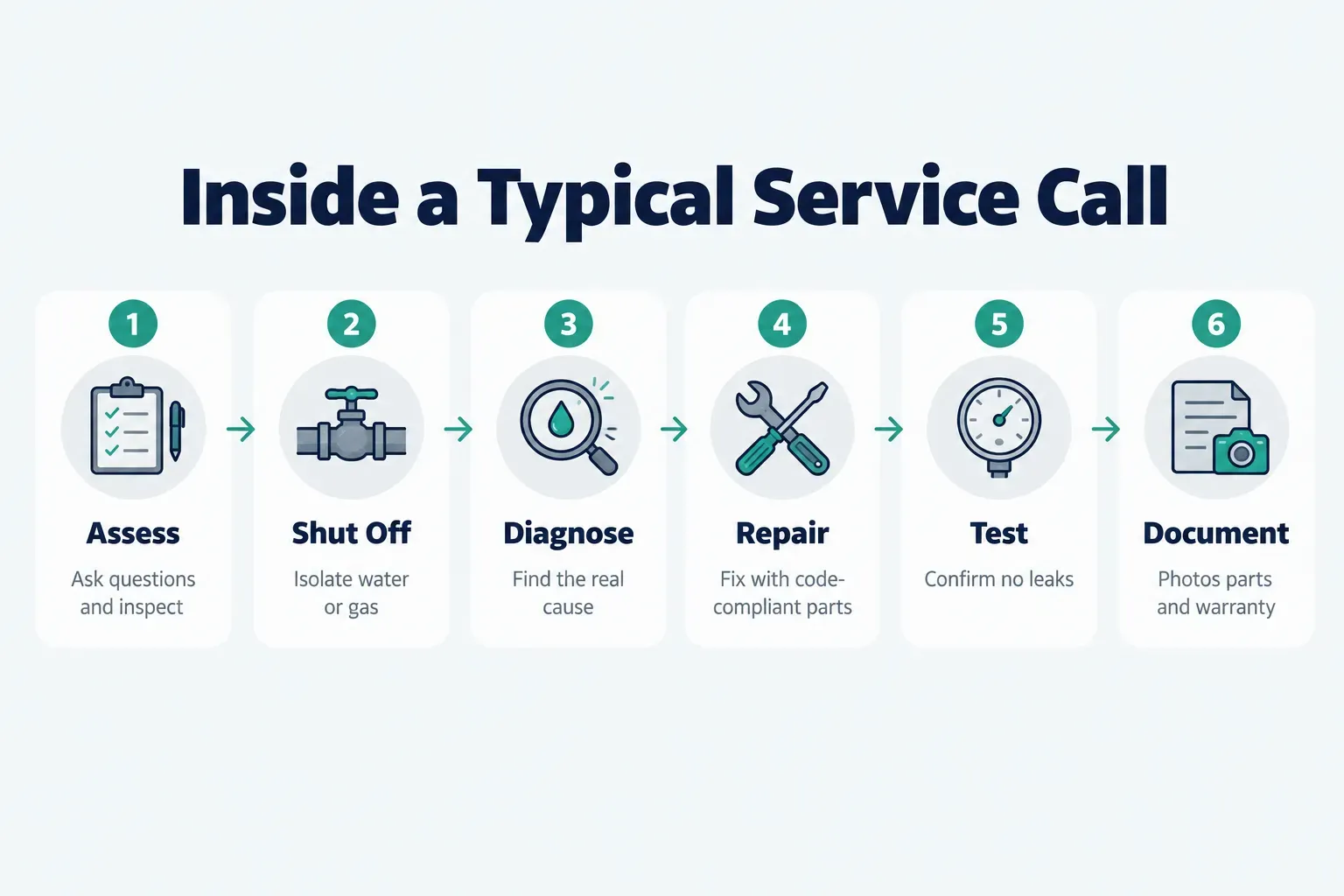
Don’t skip that last step.
Photos, part numbers, and warranty terms protect you if the problem returns or you sell the house. They also protect the plumber if a dispute arises later.
Finding hidden problems
The hardest leaks are the ones you can’t see.
Modern leak detection relies on a few proven methods:
- Pressure testing: The plumber isolates a section of pipe, pressurizes it, and watches a gauge. A drop in pressure over a set period confirms a leak somewhere in that section.
- Drain camera inspection: A waterproof camera on a flexible cable travels through drain and sewer lines, showing roots, cracks, grease buildup, or collapsed sections in real time.
- Moisture meters: These handheld tools read moisture levels inside drywall, flooring, and cabinets. They help map how far water has spread behind surfaces.
- Water meter comparison: With every fixture off, the plumber records the meter reading, waits one to two hours, and checks again. If the number moved, water is escaping somewhere.
Some plumbers also use acoustic listening devices and thermal cameras, especially for slab leaks under concrete foundations.
Emergency vs scheduled work
Not every call carries the same urgency, and pricing reflects that.
- Emergency calls: Burst pipes, sewage backing up into the house, gas smells, and total loss of hot water in winter. Plumbers aim to respond within hours, and after-hours or weekend rates often run 1.5 to 2 times the standard rate.
- Scheduled work: Fixture installations, water heater replacements, inspections, and preventative maintenance. These are booked days or weeks out and usually priced as a flat rate or standard hourly fee.
The takeaway?
Many “emergencies” start as ignored scheduled jobs.
Catching a weeping valve on a Tuesday costs far less than a flood on Saturday night.
Plumber, pipefitter, or drain cleaner?
Ask three tradespeople what “plumbing” covers and you might get three different answers.
The trades overlap, but they aren’t interchangeable.
Hiring the right one saves time and keeps the work legal.
Licensing and specialties
Licensing requirements vary by state and often by city or county. Some states license plumbers at the state level, while others leave it to local jurisdictions.
A license in one place doesn’t automatically transfer to another.
Within plumbing, credentials often stack.
A general plumbing license covers water supply and drainage, but gas piping frequently requires a separate gas fitter certification. Backflow prevention testing, medical gas installation, and some water treatment work carry their own specialty certifications too.
Then there are related trades.
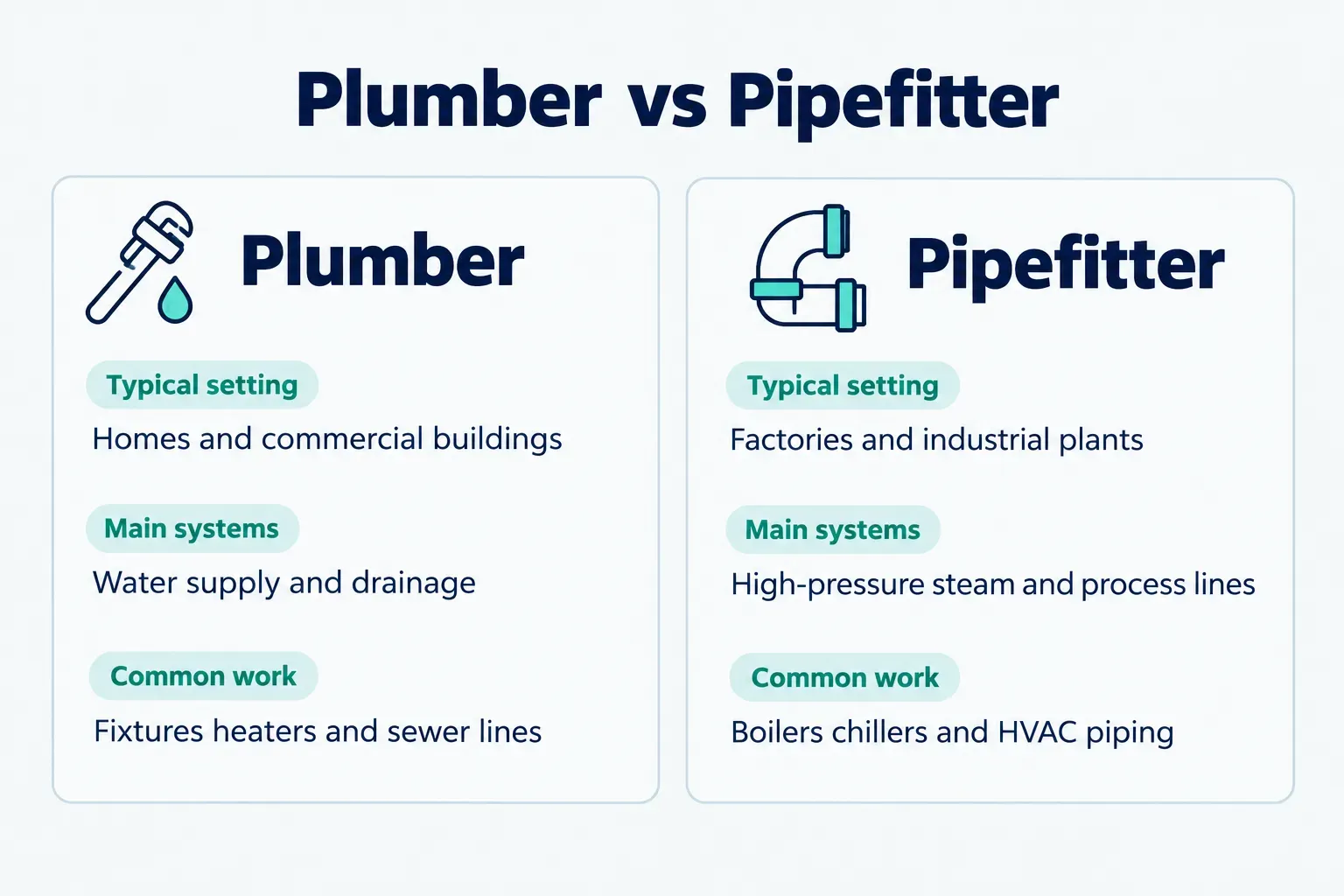
Pipefitters and steamfitters work mostly in industrial and commercial settings, handling high-pressure systems, steam lines, chemical piping, and HVAC hydronic piping.
Drain-cleaning specialists focus narrowly on clearing clogs and running cameras, and in many areas they can’t legally replace pipe or fixtures.
Getting to full licensure takes time.
A typical plumber apprenticeship lasts four to five years, combining roughly 2,000 paid on-the-job hours per year with classroom instruction in code, math, and blueprint reading.
After passing a licensing exam, apprentices become journeymen, and most jurisdictions require another one to two years of experience plus a second exam to reach master plumber status.
Tools of the trade
A plumber’s truck is basically a rolling workshop. Core plumbing tools include:
Pipe wrenches in several sizes for gripping and turning threaded pipe.
Drain snakes and augers, from handheld closet augers to motorized drum machines that reach 100 feet or more into a sewer line.
Pipe cutters for copper, PEX, PVC, and cast iron, each needing a different blade or method.
Press-fitting tools have changed the job significantly in recent years.
They create watertight copper and PEX joints in seconds without an open flame, which matters in occupied homes.
And video inspection cameras have turned sewer diagnosis from educated guessing into visual proof.
The physical side of the job
Plumbing is hard on the body.
Plumbers spend hours in crawlspaces, attics, and under sinks, often kneeling, twisting, or lying on their backs.
Lifting a 50-gallon water heater (well over 100 pounds empty) is routine.
Then there’s exposure.
Sewage, mold, and stagnant water carry real health risks, so plumbers wear gloves, eye protection, knee pads, and respirators when needed.
Soldering and cutting add burn and injury risks of their own.
The schedule can be just as demanding.
Many plumbers rotate through on-call shifts, since pipes don’t burst on a nine-to-five calendar.
That unpredictability is one reason skilled plumbers command solid pay.
DIY or call a pro?
Plenty of plumbing fixes are genuinely beginner-friendly.
Others look simple but hide serious risk behind a wall or under a slab.
The dividing line usually comes down to three questions: can you see the whole problem, can you shut off the supply, and does the job require a permit?
These tasks are fair game for most homeowners:
- Plunging a toilet: Use a flange plunger (the kind with an extended rubber lip) and a firm seal. Most toilet clogs clear within a dozen strong plunges.
- Replacing a faucet washer or supply line: Shut off the fixture valve, open the faucet to drain pressure, and swap the part. Bring the old one to the store to match it.
- Clearing a shallow sink clog: Remove and clean the P-trap, or use a small hand auger. Skip chemical drain cleaners, which can damage older pipes and burn skin.
- Cleaning aerators and showerheads: Soaking them in vinegar removes mineral buildup and often restores pressure and water efficiency.
These jobs belong to a licensed plumber:
- Gas line work of any kind: A small mistake can cause a leak, fire, or carbon monoxide exposure. Most jurisdictions legally require a licensed, gas-certified professional.
- Water heater installation: Venting, gas connections, relief valves, and expansion tanks all have specific code requirements. Bad installs can fail inspections or create explosion risk.
- Sewer line repair: This involves excavation or trenchless equipment, permits, and often coordination with the city.
- Anything behind a wall or requiring a permit: Hidden pipework can conceal existing damage, and unpermitted work can complicate insurance claims or a future home sale.
Why push for a pro on borderline jobs?
Because small leaks get expensive fast.
According to the EPA’s WaterSense program, the average household’s leaks waste nearly 10,000 gallons of water per year, and about 10% of homes have leaks wasting 90 gallons or more every day.
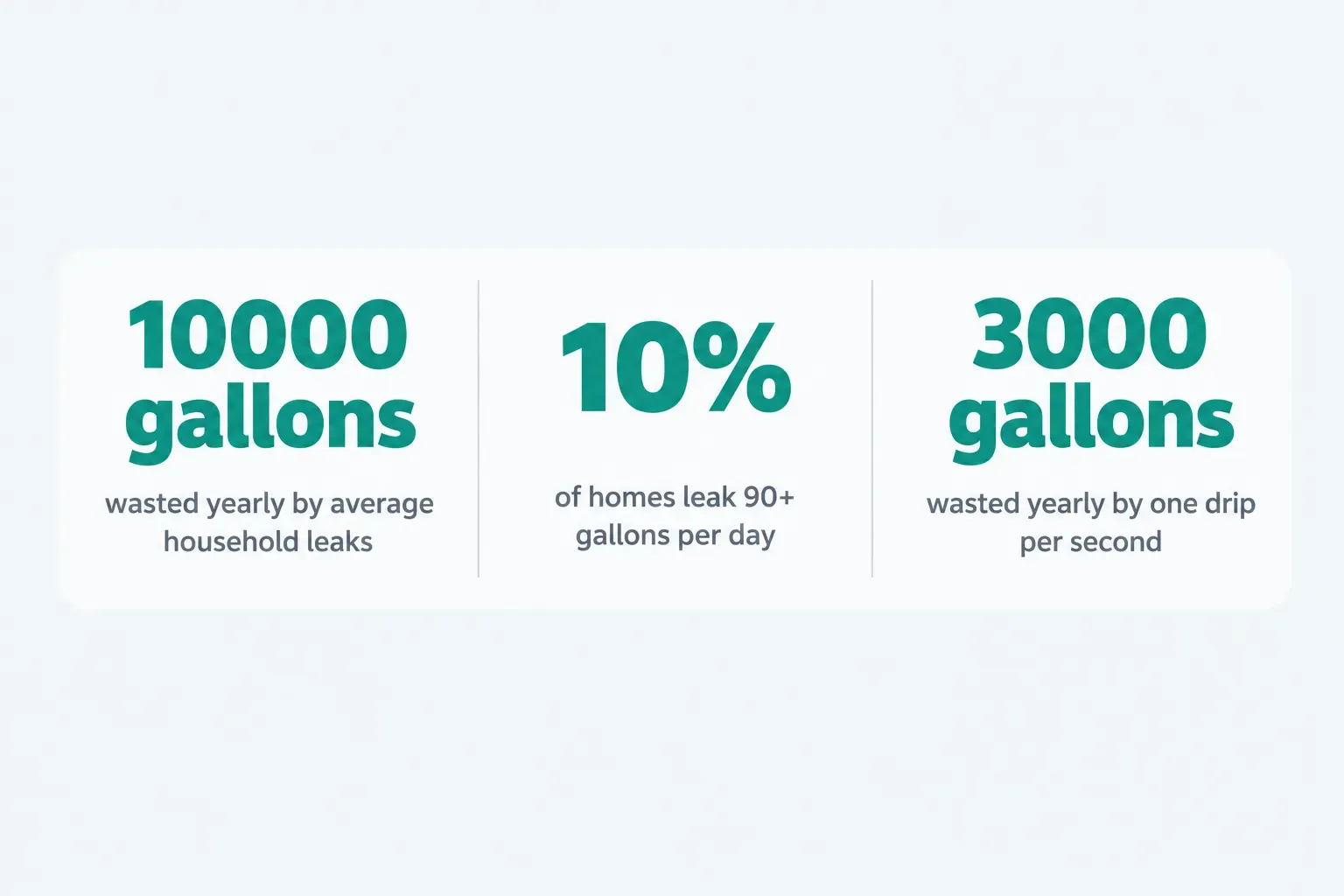
A faucet dripping once per second wastes more than 3,000 gallons a year on its own.
And the water bill is the cheap part.
A worn gasket under a sink can soak a cabinet base for months, feeding mold and softening the subfloor long before anyone notices… until the floor flexes underfoot.
When you do call, give the plumber a head start. Share these details before they arrive:
- Exact location: “Upstairs hall bathroom, the toilet on the left,” not just “a toilet.”
- Symptoms: Dripping, gurgling, slow draining, no hot water, odors, or strange noises, plus when they started.
- Shutoff status: Whether you’ve already closed the water or gas, and where.
- Fixture or appliance age: A 12-year-old water heater points toward replacement rather than repair.
- Photos or error codes: Tankless heaters and smart valves often display codes that speed up diagnosis.
- Visible damage: Stains, warped flooring, bubbling paint, or mold signal the leak has been active for a while.
Plumbing problems also rarely arrive alone.
A failed water heater might need an electrician, a flooded basement may call for emergency restoration, and a leaking dishwasher sometimes turns out to be an appliance repair job.
Platforms like Frendex make that coordination simpler by showing live availability, pricing, and reviews for plumbers alongside other home service categories in one app, so you aren’t juggling five different phone numbers.
The bottom line on plumbers
Here’s the simple rule.
Minor, visible, low-risk fixes like plunging a toilet or swapping a supply line are fair DIY territory.
Anything involving gas, sewer lines, permits, or pipework hidden behind walls calls for a licensed plumber.
Don’t wait for a crisis to act.
If you’ve noticed a slow drain, a faint drip, or a stain on the ceiling, take photos and jot down the symptoms today.
That small effort shortens diagnosis and often keeps a $200 repair from becoming a $5,000 emergency.
And as of 2026, finding verified local help no longer means scrolling through outdated listings and hoping for a callback.
When booking a trusted plumber takes minutes instead of days, preventative maintenance stops feeling like a chore.
It becomes the obvious choice.
Frequently asked questions
What exactly does a plumber do?
A plumber installs, repairs, and maintains the systems that bring clean water into a building, remove waste water, and in many cases deliver gas. The work always starts with diagnosis, using tools like pressure tests and drain cameras, before any repair begins. Everything must meet local building codes.
What are 5 things plumbers do?
Plumbers repair leaks and clogs, install fixtures and appliances, replace water heaters, repair sewer lines, and perform preventative maintenance. Many also handle gas line work, though that usually requires an additional certification.
What is the main job of a plumber?
The main job of a plumber is protecting the potable water supply and keeping waste flowing safely out of the building. That means preventing contamination, leaks, and backflow, not just fixing whatever is visibly broken.
What does a plumber do in a house?
In a house, a plumber fixes faucets, toilets, drains, and water heaters, installs new fixtures, and connects appliances like dishwashers and disposals. They also inspect pipes, test water pressure, and diagnose hidden leaks inside walls or under slabs.
What problems can a plumber fix?
A plumber can fix leaks, clogs, low water pressure, running toilets, water heater failures, sewer backups, and gas line issues if properly certified. Specialty systems, such as industrial steam piping or septic drain fields, may require a pipefitter or septic specialist instead.
Is plumbing a good career?
Yes, plumbing is a strong career for people who like hands-on problem solving. In the U.S., the Bureau of Labor Statistics reports a median annual wage of about $62,970 for plumbers, pipefitters, and steamfitters (May 2024), with roughly 44,000 openings projected each year. That said, licensing rules, pay, and demand vary widely by state and locality, so check local requirements before starting an apprenticeship.
Need a hand with something?
The Frendex map shows you who is available near you, in real time.
Get the app free Get the app freeFree, no card needed
Related articles

Pest control cost in 2026: What you'll really pay
Real 2026 pricing for one-time visits, recurring plans, and termite or bed bug jobs. Learn what drives $95 vs $1,400 quotes before you sign.
Boiler maintenance: A homeowner's safety and service guide
Learn which boiler checks are safe to DIY, which need a pro, and the warning signs that mean call for help now. A homeowner's framework for 2026.
Rodent control: A homeowner's step-by-step guide
Skip the trap-and-hope cycle. This 8-step IPM method shows why sealing entry points matters more than traps. See the full sequence inside.